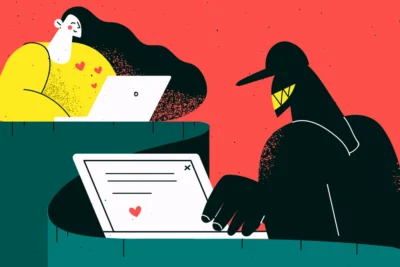
What is an online romance scam?
So, you may be thinking, “what is an online romance scam?”. Unlike the infamous Shimon Hayut or so-called Tindler Swinder, who used dating apps to meet multiple women to build a huge line of credit and loans in his victims’ names, ultimately leaving them with the bill, an online romance scam, often referred to as the sweetheart scam or online dating scam, entails the creation of a deceptive identity on various social media platforms and dating sites such as Facebook, Instagram, TikTok and numerous others. The goal of the online dating scammer is to engage individuals with the idea of a romantic or intimate relationship, ultimately aiming to manipulate them for monetary gains. Recent data from Lloyds Banking Group indicates that the number of UK romance scams has risen by as much as 20% since 2022, where victims have lost around £8,000 on average. Also, men now make up the majority of the cases, and it is suggested that people aged 65 and 74 are most likely to become victims of online dating and romance scams. Further research from ExcellenceIT suggests that around £68 million had been lost to romance scams in the UK in 2022, where potential victims had been more vulnerable on Valentine’s Day. As we witness an alarming increase in romance fraud cases yearly, how can we protect ourselves from these pervasive romance scams? Welcome to Private Investigation Detectives, your dedicated experts in online dating scams. Sit back and get ready to learn how to spot a fake identity online and how NOT to become a victim of an online romance scam.
Romance Scam Examples
Now that we’ve briefly explained an online romance scam, let’s give some of the more common examples of how to tell if someone is scamming you online:
Love Bombing
Love bombing is the more common and novice technique in online dating scams. This technique involves the scammer showering the victim with excessive affection, attention, and compliments within a very short period of time to make the victim feel loved and appreciated. Once a rapport has been established between the scammer and their victim.
Blackmail
Blackmail online scamming involves the scammer building a trusting relationship with their victim, often receiving intimate or explicit images and private information for future gain and manipulation. Once a relationship has been established, they often threaten to expose media or information to force the victim to comply with their demands.
Catfishing
Catfishing, popularised by the reality TV series “Catfish,” refers to scammers fabricating profiles containing identical information to deceive individuals, including friends, family, and sometimes even partners, into providing financial assistance.
Real Identity Dating Scam
The more difficult one to suspect is the identity dating scam. With this method, the scammer will build a trusting relationship online, showing their identity on video and voice calls to give the impression that they are genuine to the victim. Once a relationship has been established between the scammer and their victim, like the love-bombing technique, they will ask for money and gifts.
How to spot online romance scams
Detecting and avoiding online romance scams is crucial in today’s digital world, where scammers employ increasingly sophisticated tactics to deceive and manipulate unsuspecting individuals. Understanding the signs of online romance fraud is the first step in protecting yourself from heartache and financial loss. So, what red flags should you look out for when trying to identify romance fraud?
- They avoid using video calls to show their identity.
- Your “partner’s” new social media profile has sent you a friend request.
- They want to establish a bond quickly, showering you with affection and compliments within the early stages of communication.
- They ask for financial help, often telling you about their money problems and other issues that require money to fix them.
- They always make excuses for not meeting you despite planning a date.
- They avoid answering personal questions about themselves, such as location, age, job title, etc.
- You do a reverse photo search and find out it belongs to another person on the internet.
- They seem like their life is too good to be true. For example, they are a doctorate, Lamborghini driving millionaire who enjoys giving money to charity and feeding the homeless! *Bombastic Side Eye*
How to avoid becoming a victim of a romance scam
Preventing dating scams requires a combination of vigilance, awareness, and proactive measures to safeguard your personal information and emotional well-being. Being well-informed and prepared is crucial because online dating has become increasingly popular. Here are some comprehensive strategies to help you prevent falling victim to dating scams:
Trust your instincts – If you feel something is off when the conversation takes off, trust your gut feeling and try to expose as much fakeness as possible.
Be careful about sharing too much media and information about yourself – Don’t send out explicit or private information about yourself that would enable a potential scammer to blackmail you.
Research your match – If they seem too good to be true, research their life to see if their words are true.
Do NOT send money to somebody you have never met – Unless you have met your match and have built a strong relationship you can trust with all of your heart, do not send money, especially large amounts, to somebody you have not seen in real life.
Using credible dating platforms and speaking with verified profiles –
Video chat to see if they are real – If you suspect somebody is catfishing you, ask them to have a video chat with you to confirm that they are, in fact, the person they could potentially be trying to portray.
Could you be a victim of an online romance scam?
In summary, an online romance scam involves the creation of a deceptive identity to manipulate individuals for financial gain, and it’s on the rise globally, with victims losing substantial sums of money. To protect yourself, trust your instincts, avoid sharing sensitive information, and verify the authenticity of your online connections through research and video calls. If you feel you’re becoming a victim of an online dating scam, contact a Chief Detective today at Private Investigation Detectives.